Some deployments become reports, photographs, and entries on a résumé.
Others stay with you.
The 2017 West Plains flood is one of those experiences that has never really left me.
On the afternoon of April 27, 2017, I was serving as Deputy Chief of EMS with NTA EMS Rescue when we received word that Missouri was preparing to deploy swift-water rescue resources to southern Missouri through the Missouri Fire Mutual Aid System.
It would be NTA’s first state deployment.
That evening became a blur of telephone calls, equipment checks, hurried decisions, and attempts to anticipate what we might face. By the next morning, our Region H team was on the road with both boats and nearly every piece of rescue equipment we could carry.
There were nine of us, six members of NTA EMS Rescue and three firefighters from the St. Joseph Fire Department: John Barlacy, Brandon Fordyce, Edward Truitt, Steve Sanneman, Jake Loving, Paris Jenkins, Jeramie Howery, Chuck Beaty, and me, Corey Sloan.
We left without knowing exactly where we would end up. At first, we thought we might be headed toward Rolla. The Missouri State Emergency Operations Center later redirected us to West Plains Fire Department Station 3.
For the next several days, that station would become our home.
We unloaded our equipment, arranged cots in an unfinished room above the apparatus bay, and prepared to wait. Anyone who has deployed knows that disaster response can involve long periods of waiting, waiting for an assignment, waiting for the weather, and waiting to learn whether the forecast will become reality.
My assigned responsibility was communications.
I was the “comms guy.”
That was the plan, anyway.
Missouri Task Force One was reassigned to Ellington, and our Region H personnel were divided into two rescue teams. We worked alongside the West Plains Fire Department, the Missouri State Highway Patrol Marine Division, a Missouri conservation agent, and other responders from West Plains and Howell County.
Then came the thunder.
It was not the distant rumble of an approaching storm. It was one enormous, violent crack that seemed to shake the building.
And then the sky opened.
The rain did not simply fall. It came down with such force that it felt as though Zeus and Poseidon were fighting a war, and we had somehow been placed directly in the middle of it.
Within minutes, streets began disappearing beneath muddy water. Vehicles were lifted, pushed together, and carried away. Homes and businesses filled with water. People climbed to upper floors and rooftops because there was nowhere else to go.
The radio traffic changed almost instantly.
Calls for help came one after another. People were trapped. Water was rising. Access routes were closing behind us almost as quickly as we could move through them.
Then, during the most critical part of the response, communications began to fail.
MOSWIN stopped working.
The repeaters failed.
Cellphones were useless.
Landlines were gone.
One system after another fell silent until nearly every method we depended upon to coordinate help had disappeared.
The only communication I had outside the immediate area was an intermittent VHF, line-of-sight connection with the Missouri State Highway Patrol in Willow Springs on VLAW 31, the statewide law-enforcement mutual-aid channel.
The signal was weak and unreliable, but it was all we had.
It became our only way to request additional resources.
Then we received a call involving a security guard trapped in an industrial area.
The water was too dangerous for us to reach him with the resources immediately available. We needed a personal watercraft, a jet ski, capable of maneuvering through the conditions and reaching him quickly.
His life was slipping away in front of us, and we could not get to him.
I transmitted the request through that fragile radio connection and waited for an answer.
What came back remains among the most haunting words I have heard during my career:
“Region H Water Rescue Team, you are cut off. We cannot get resources to you. Good luck and Godspeed.”
There are moments in public safety when the radio brings reassurance: additional units are coming, an ambulance is en route, help is minutes away.
This was not one of those moments.
Those words carried an emptiness that is difficult to describe. They meant no additional boats were coming. No specialized resource was on its way. There was no cavalry just beyond the horizon.
We were alone.
And a man was going to die unless someone found another way.
There was no time for frustration, blame, or fear. There was only the person in danger and the responsibility to keep trying.
A Missouri conservation agent and the West Plains assistant chief of police did exactly that. At tremendous personal risk, they brought a flat-bottom boat into the operation and helped make the rescue possible.
Without their willingness to act, and without that boat, a life almost certainly would have been lost.
That moment has remained with me because it revealed both the vulnerability and the strength of emergency response.
Technology failed.
Infrastructure failed.
The plans we normally depend upon were no longer enough.
What remained were human beings willing to improvise, take responsibility, trust one another, and place themselves in danger for a stranger.
Lightning struck around the rescue teams and illuminated the hillsides. Heavy rain and darkness reduced visibility to almost nothing. Debris moved through the water with enough force to injure or kill a responder. At times, the current pulled so hard that every step required concentration.
We knew the danger.
We also knew that somewhere beyond the rain, someone was waiting and wondering whether help was coming.
So we went.
Through the combined efforts of the West Plains Fire Department, our Region H rescue teams, the Missouri State Highway Patrol Marine Division, the conservation agent, law-enforcement officers, and the many other responders supporting the operation, 79 people were rescued that night.
Not one life was lost in West Plains.
That matters because no single person rescued 79 people. No single agency could have accomplished what occurred that night.
It happened because people trusted one another.
It happened because local responders guided outside teams through a community disappearing beneath floodwater.
It happened because people accepted assignments they had not expected, used whatever resources remained available, and kept moving toward those who needed them.
Nearly a decade later, I still think about that night.
I remember the sound of the rain against the station. I remember the radio traffic slowly disappearing as one communication system after another failed. I remember the emergency lights reflecting across the floodwater. I remember the unbearable helplessness of seeing a man in danger and knowing that the resource we needed was not coming.
Most of all, I remember the people who refused to accept that nothing more could be done.
West Plains taught me that preparedness is not a binder sitting on a shelf.
Interoperability is not simply whether two radios can communicate when conditions are good.
Leadership is not always standing in a command post and giving instructions.
Leadership is recognizing that the plan has failed, the system is overwhelmed, and the role you expected to fill is no longer the role the situation requires.
It is adapting without hesitation.
It is trusting the people beside you.
It is finding another way when the answer from the radio is that no help is coming.
After nearly four decades in public service, I have learned that our greatest impact rarely comes from the titles we hold or the recognition we receive.
It is found in moments like West Plains, when conditions are at their worst, communications have gone silent, the outcome is uncertain, and people still choose to step forward for complete strangers.
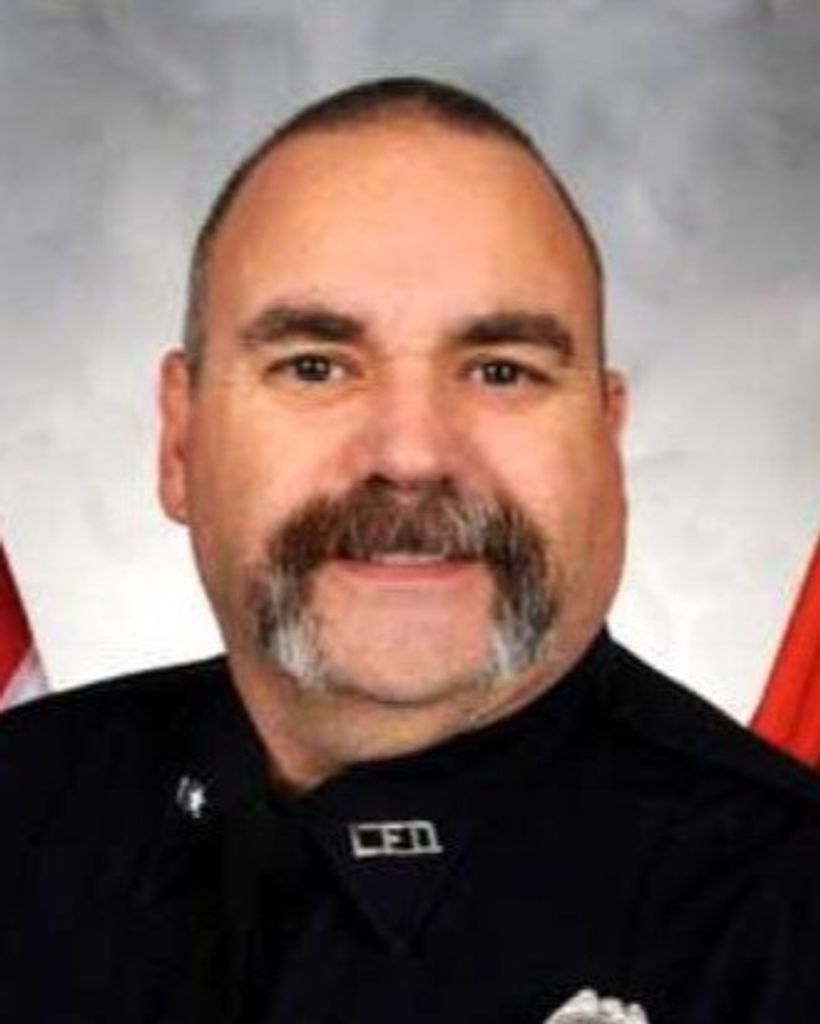
But I cannot tell this story without remembering a dear friend and member of my boat team: Steve Sanneman.
Steve worked part-time as a paramedic with NTA EMS Rescue while serving full-time as a firefighter-paramedic in Liberty. During the West Plains deployment, he was beside me, facing the same rising water, uncertainty, and danger.
There are people with whom you simply work a shift, and then there are people with whom you share an experience that connects you for the rest of your life. West Plains was one of those experiences.
In 2024, Steve died after battling cancer.
When I look at these photographs now, I do not see only floodwater, rescue boats, emergency lights, and exhausted responders. I see Steve. I remember the man who answered the call, climbed into the boat, and entered dangerous water to help people he had never met.
Seventy-nine people were rescued through the combined efforts of everyone who responded that night. Behind that number were individual responders like Steve, people willing to risk their own safety so that someone else could return home.
The floodwater eventually receded. The equipment was packed, our team returned home, and the deployment ended.
But some experiences never truly end.
Some voices on the radio stay with you. Some moments remain as clear as the day they happened. And some teammates leave an empty place that time can never completely fill.
Rest easy, Steve Sanneman. It was an honor to serve beside you. You remain part of the West Plains story, and part of ours.